
Late Fame
Directed by Kent Jones
Magnolia Pictures
The young and up-and-coming artist longs to be recognized as a person of exceptional talent and ability. As much as the art itself, the rewards of fame and fortune drive them forward. In reality, only a very few realize their dreams. For most, the idealism of youth gives way to the more prosaic business of making a living and paying the rent.
The human urge to create and make meaning never fully goes away, however. This is one of the themes explored in Late Fame, a movie starring Willem Dafoe as Ed Saxberger, a minor 1970s poet who is rediscovered late in life by a new generation of admirers. Set in New York City, the movie shows a day in Saxberger’s life, from home to the post office, where he sorts mail, to evenings at the local bar and then home again.
The routine of Saxberger’s life is interrupted when he is spotted in the street by Meyers (Edmund Donovan), an eccentric and idealistic leader of a group of artists, performers and poets. To Saxberger’s surprise, Meyers relates that members of the group venerate a book of poetry Saxberger wrote fifty years ago. Saxberger agrees to join the group and is received as a returning literary Messiah. Gradually, he perceives that his newly acquired disciples are offering him a second chance to live out his dreams.
The story essays minor yet parallel stories. Meyers, who is ambitious for himself and the group, believes Saxberger will inspire them all to greater creative endeavors. The older poet will act as a kind of talisman, a literary ancestor who will be father to a new generation of artists and poets.
Meyers diagnoses the cause of our current literary funk as the encroachment of modern technology. For this reason, the group bans smartphones from all literary gatherings. It is a symbolic gesture as much as anything else - a rejection of modernity rooted in nostalgia for a past that was more vital and vibrant.
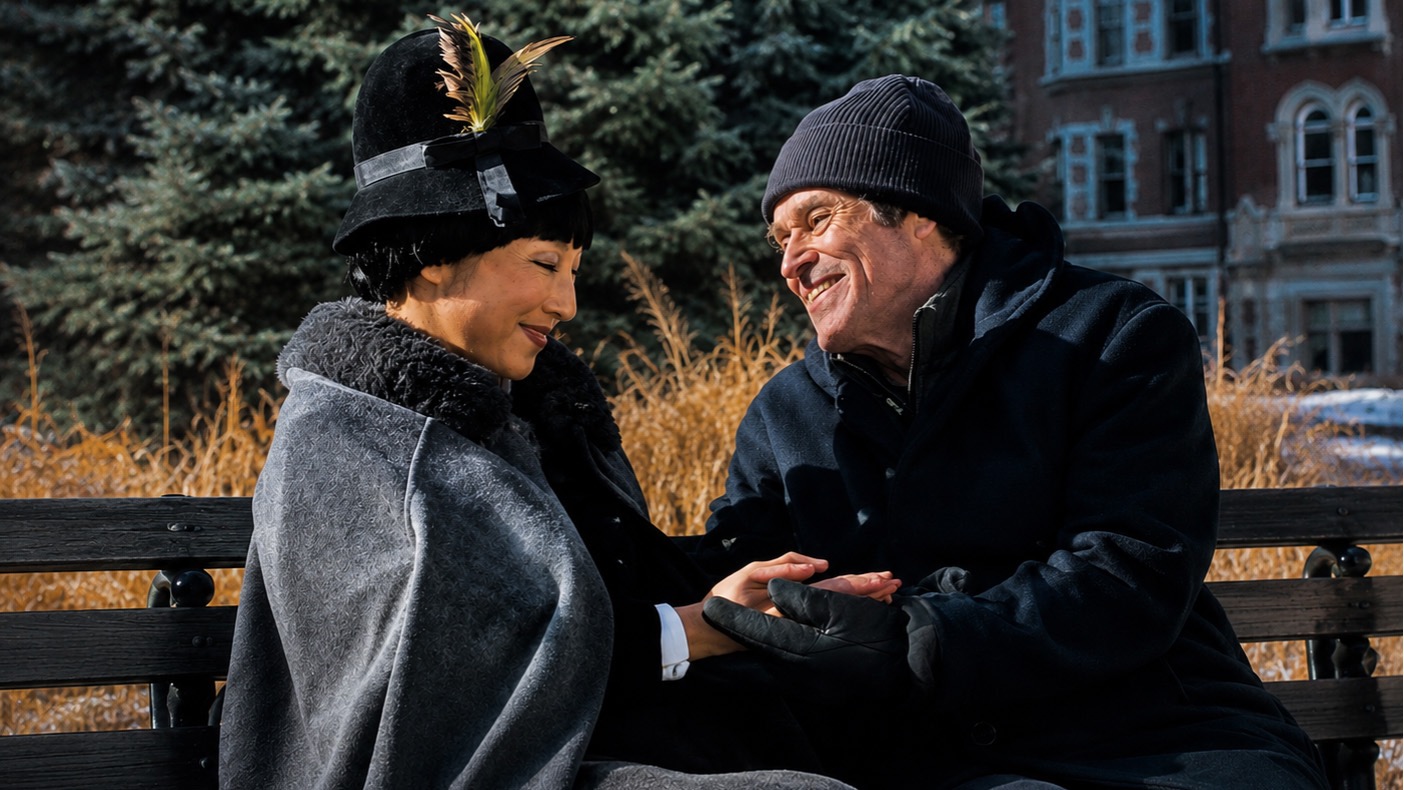
As Saxberger enjoys the attention of his young acolytes, the story takes another turn, as he falls in love with the actress Gloria, played by Greta Lee. Although another member of the group warns him about Gloria’s effect on men, Saxberger pays no heed; he is too busy enjoying the blessings of late fame to care. In his life’s unexpected renaissance, it all makes perfect sense.
Late Fame is the kind of movie that is rare these days: character-driven, unostentatious and without a social or political agenda to push. Willem Dafoe gives a master-class in film acting, wonderfully conveying the subtle emotional changes that his new status has wrought. Cinematographer Wyatt Garfield captures every nuance, locating Dafoe against the muted backdrop of the city’s streets, clubs and bars.
Among the supporting cast, Edmund Donovan as Meyers is fascinating in a demanding role that casts him as a literary romantic and team organizer. His character combines confidence and insecurity as he tries to realize his personal vision. The heartbreaker Gloria is smart and ambitious. The camera’s many close-ups of Greta Lee emphasize the character’s beauty and vulnerability.
All of them long for something more, to break out of their mundane lives and find glory and glamor. One of the pleasures of the movie is seeing whether any of them manage it. Late Fame explores the personal yearning for significance while asking questions about the nature of art and society. All credit to scriptwriter Samy Burch (working from a recently discovered novella by Arthur Schnitzler) and director Kent Jones for crafting one of the finest movies of the past year.
David Beresford
0 Comments
There are no comments.
Stay Tuned
Sign-up for David's newsletter