

Resting in Wonder
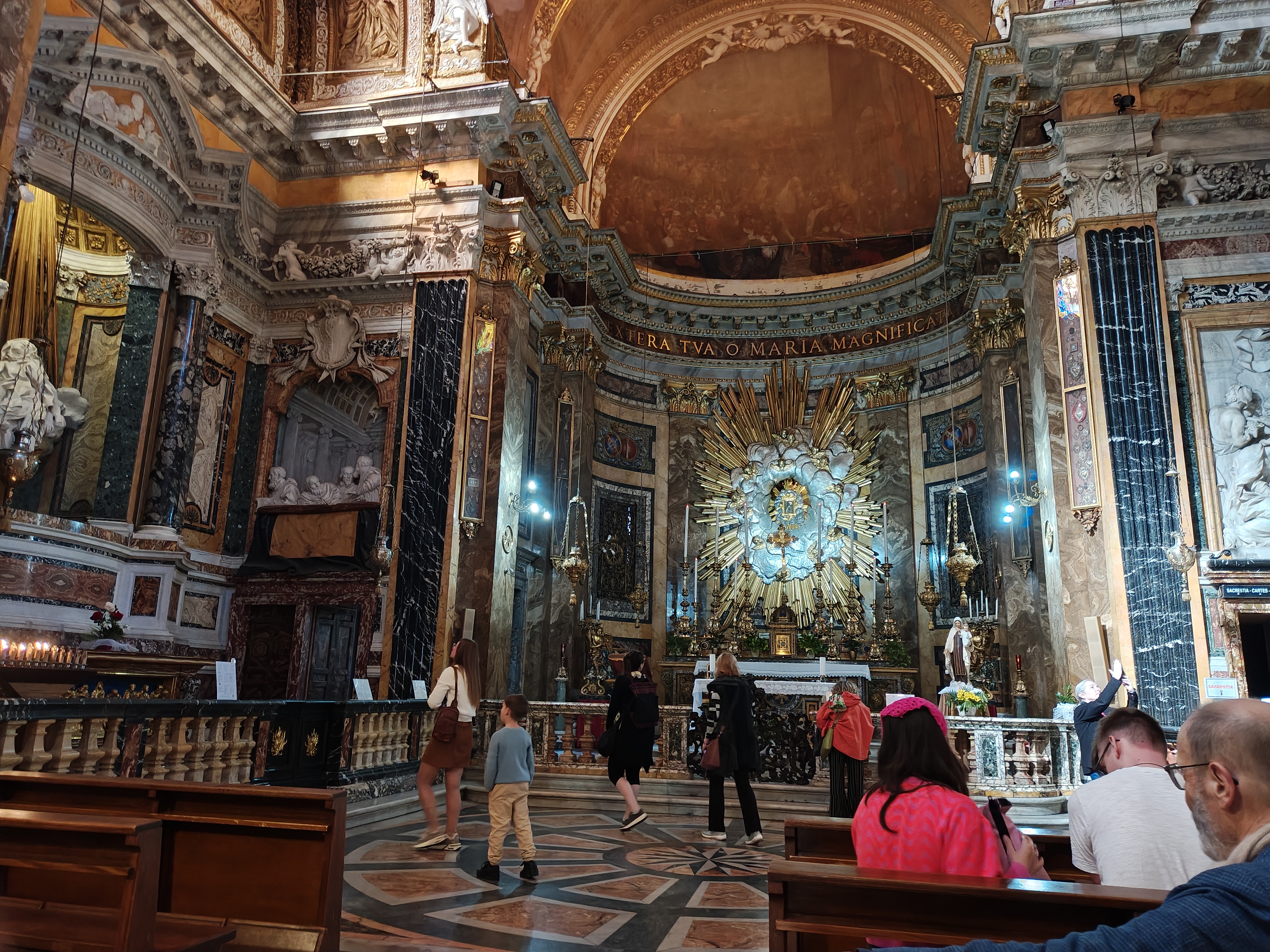
Toward the end of our pilgrimage in Rome last week I came down with a heavy cold. Nothing serious, but enough to put a damper on the final two days. I wondered where I could have caught it. There were plenty of opportunities, not least during our visit to the Vatican Museum where, two days' earlier, we shuffled through the historic rooms and chapels shoulder to shoulder with thousands of others.
As a consequence, I was unable to join my fellow pilgrims on Thursday for the daily excursion. I stayed in the hotel, but soon got bored. I figured that, if I was unwell, I might as well sit in a church as in a hotel room. So I decided to visit the Church of Santa Maria della Vittoria - a ten minute walk away - home to the famous Bernini sculpture of The Ecstasy of St. Teresa.
On arrival I noticed a group a people gathered at the east end of the church. I guessed they were looking at St. Teresa, and so I went and joined them. After a while I knelt in the pew and prayed. Then I sat for a long time, allowing my thoughts to drift as I observed the people coming and going.
Most of the visitors were tourists, although many, like me, simply sat and enjoyed the peaceful ambiance of the church. In some churches there is a strong sense of holiness, of God’s presence, and that was certainly true here. Not even the noise from the traffic outside could disrupt the tranquility inside.
With its sturdy marble pillars, beautiful mosaics, ornate plasterwork and gilded artwork, the interior is a wonder. At first sight it is overwhelming, especially if you are used to the more modest decorations offered by Episcopal churches. However, once you adjust your perceptions, the opulence and splendor have a strangely calming effect.
While expressing in architecture and design its beauty and reverence for God, the church in its solid construction is also hinting at something else: permanence. No gust of wind, literal or metaphorical, will blow this church over. Through the centuries the church has remained while everything outside has changed. It survived the fascists in the 1930s and the communists in the 1970s. It will be here long after I have gone, too.
Bernini’s white marble statue depicts an angel firing an arrow of God’s love into the heart of St. Teresa. For a brief and intense period, Teresa is transported into an otherworldly spiritual and physical realm. St. Teresa of Avila was a passionate lover of God, and God’s arrow is intended to increase her longing for God. This is one of the fruits of mysticism, not to be sought for its own sake but to be received as a gift from God.
One final reflection: churches are beneficial for many reasons. Consider the current human affliction, that of the smartphone. We have become a world of “head down” humans, every five minutes looking down at our phones. The opposite of looking down is looking up. That was one of the things I observed about those entering the church: they raised their heads and looked up. I thought it an apt metaphor for our times; we should be doing more of the same in every aspect of our lives.
I’m not sure that my visit helped my cold, but it did help my soul. I felt immeasurably better there than in the hotel. Now that I am back in Delaware, it comforts me to remember that visit. While it is good to be home, I occasionally think of Rome, and picture myself sitting quietly in the pews of Santa Maria della Vittoria.
Father David
0 Comments
There are no comments.
Stay Tuned
Sign-up for David's newsletter