

What Killed Jason Arday?
While the US media has been focused on the Lindsay Clancy trial, involving the killing of three young children, across the pond a tragic story of a different kind has been making headlines.
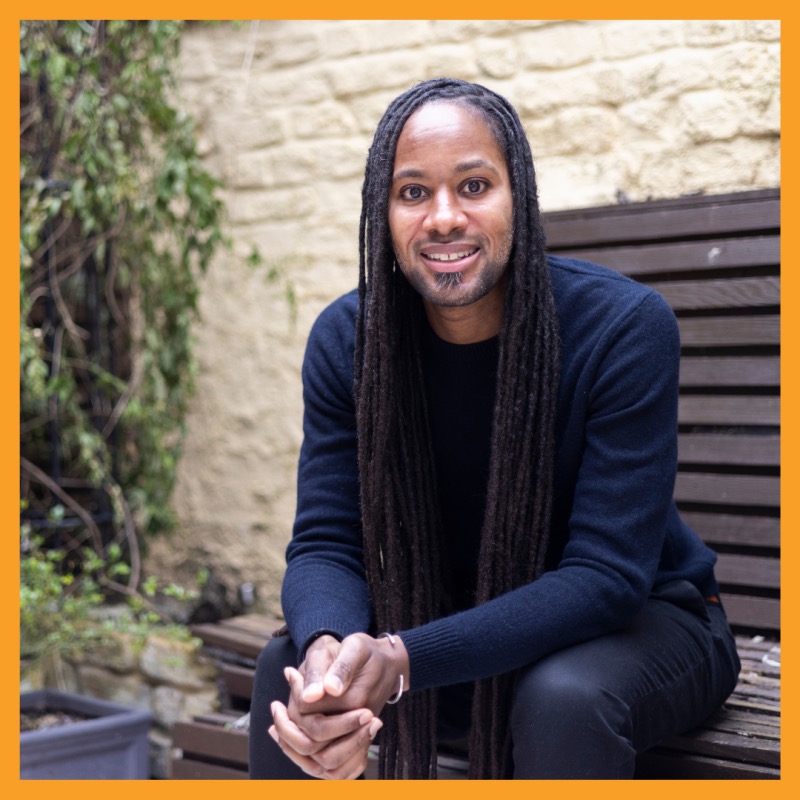
In February 2023, the University of Cambridge, England proudly announced the appointment of the youngest black professor in its history. Jason Arday, 37, became the new Professor of Sociology of Education. It was, everyone said, an inspiring example of how a young black man from a humble background could rise to the top in multi-cultural Britain.
Three and a half years later, the story had changed. Following credible allegations of plagiarism, Arday had resigned. Nine days later, as the extent of his fraudulent academic history came to light, he committed suicide. He left behind a wife and two young children. Arday’s tragic story held many strands. As well as being a plagiarist, Arday was a fantasist. A number of personal claims he made about himself turned out to be completely false.
Arday claimed that, at the age of 3, he was diagnosed with a form of Autism Spectrum Disorder, which meant he was unable to speak until he was 11, or to read or write until he was 18. In adulthood, with the support of friends and family, he was able to overcome this disability. Arday went on to acquire two Masters qualifications and a PhD in educational studies. He ran 600 miles across six days, and 30 marathons in 35 days, the last one with a broken leg, raising £5 million for charity. He was a visiting professor at Ohio State University and the University of Glasgow. Arday also assisted with installing water points in South America and West Africa through the international nonprofit WaterAid.
The problem was that none of this was true. Arday had made it all up, and had managed to co-opt senior Cambridge academia into believing it. Amazingly, he kept the façade in place for three years before finally being exposed as a fraud. Academics and journalists who checked his work for plagiarism discovered similarities between his PhD and those written by other scholars. When the evidence became overwhelming, Arday resigned on August 5, 2026.
That a PhD student plagiarized their work is not unique; former Harvard University President Claudine Gay had to resign in 2024 following a similar scandal. What was it that made Arday’s case different? With hindsight it is clear that other factors were in play, the main one being the color of Arday’s skin. Being black, his promotion reflected favorably on Cambridge’s white liberal establishment, who were able to burnish their anti-racism credentials.
Arday, while not being in the top drawer of academics, was smart enough to exploit this desire by senior management to favor black students over others. In the conversation with his senior professor, broadcast by the BBC, Arday asks her if people will see his promotion as “a tokenistic appointment.” She tells Arday that he is "the best in the world.” I suspect Arday knew full well why he had been appointed, but needed his supervisor to affirm her buy-in to the deception. This becomes important later on, as Cambridge initially stood by their man when the story broke.
As for the scope of the deception, it is staggering in its magnitude. Arday claimed to have written books that he never did. He said he had featured in a TV program that was broadcast before he was born. He described watching Nelson Mandela’s release from prison as one of the formative experiences of his life - he was four years old at the time.
One could almost admire his chutzpah, were it not for the fact that, in order to deflect any genuine inquiry into his background or capabilities, Arday resorted to threats and played the “racism” card. In 2023, after reviewing six of Arday’s published articles, David Harris, Professor Emeritus at Plymouth Marjon University, found possible evidence of plagiarism. He contacted Arday directly by email and highlighted some passages, asking Arday if he had any comments. In reply, Arday aggressively dismissed the claims, and told Professor Harris to focus instead on ableism and racism issues. When Harris sent Arday a follow up email, Arday did not reply, but instead reported Harris to the police for harassment.
In early 2024 Harris contacted Jack Grove, a journalist for the Times Higher Education (THE) magazine, and asked for his opinion on Arday’s work. Previously, when Arday was appointed professor, Grove had sent Arday a congratulatory tweet. In the light of possible plagiarism and anomalies in Arday’s personal history, Grove sent three “polite emails” to Arday asking for clarification. Arday didn’t reply, but instead referred Grove to the Metropolitan Police, who called Grove and asked him not to contact Arday again, explaining that his enquiries were affecting Arday’s mental health. Grove relates what happened next.
“Despite the thoroughness of my investigation, THE did not run the story. While I was personally disappointed, I understood; by this point, Arday’s solicitors had been in touch with THE and it was clear that the story could tie the publication up in months of expensive litigation. Even if we were right – and I stand by my reporting – it would have been ruinously expensive.”
Many of Arday’s pupils from Cambridge had lower than average grades when sitting exams, as if their preparation had been inadequate. One of them remarked that “It gradually dawned on us that we were learning nothing of substance, and that much of his talk was nonsense.” One complained and was called a “racist.” This was Arday’s secret power - the white fear of being called “racist” is greater than any other fear. As someone who lived in the UK for over thirty years, I can attest that this fear is real.
In my experience, today’s Britain is one the least racist countries on earth, having welcomed large numbers of immigrants from former commonwealth countries and elsewhere. However, many academics and politicians insist that, like the US, racism is systemic and widespread across all levels of society. As a consequence, white liberals who suffer feelings of guilt will take any opportunity to make amends, even if it means appointing someone to a prestigious post in Cambridge without performing due diligence.
Arday’s academic plagiarism was finally exposed on July 21, 2026 when Nathan Cofnas, an American academic, published an article titled, “DEI Fraud and Cover-Up at Cambridge” on his personal blog. Cofnas writes that “If one removes the apparently plagiarized material from Arday’s record, there is little or no real scholarship.” Was this true?
Arday’s work focused almost entirely on race questions. The nonsensical title of his thesis was “An exploration of peer-mentoring among student teachers’ to inform reflective practice within the context of action research.” The unnecessary apostrophe after “teachers” is a clue. It was lifted from another work, by Paula Zwozdiak-Myers, titled “An analysis. . . into the development of student teachers’ reflective practice within the context of action research.” The apostrophe is repeated throughout Arday’s thesis, along with numerous spelling mistakes.
Columbia University professor John McWhorter, a black author and scholar, read some of Arday’s articles. He observed that “Arday’s academic focus was not on learning new things and fashioning new ways of processing existence but on criticizing others’ morals. This is not intellection but advocacy, and that is frankly much easier than thinking.” He makes this unvarnished assessment of what happened: “[Arday] is a symptom of academia’s dehumanization of black scholars and willingness to accept intellectual mediocrity in its self-seeking pursuit of virtue.”
On one level, Arday’s demise was the awful consequence of politically constructed policies such as DEI (Diversity, Equity and Inclusion), being exposed to the light of truth. These policies are woven around the idea that places like Cambridge University are institutionally racist and must therefore be reformed. Part of the reform process is to subvert the normal means of selection and promotion, which explains how Arday got as far as he did.
As Professor McWhorter notes, such a process diminishes rather than expands black representation in higher education. It creates a web of suspicion around every black appointee, whether justified or not. Another black scholar, former assistant professor at Bates College, Tyler Austin Harper, recently shared his own observations about DEI:
“Justice and anti-racism required a two-tiered system, a sort of woke Jim Crow, in which radically separate standards were applied to white and nonwhite candidates…I came to see Bates College, self-styled beacon of progress, as an institution that was deeply, incorrigibly racist.”
While few commentators have noted it, there is a second reason why Jason Arday was promoted: politically he was left wing. He held views consistent with the monoculture in which he ascended: that of the bien pensants bourgeoisie. The constant focus on race, in accord with the left’s attachment to identity politics, was one that gave Arday his living and provided cover for his white colleagues.
Arday flourished in an academic culture that promoted those who ascribe to left wing values and causes. In many ways, this mirrors the US experience. A 2023 survey carried out by Harvard University’s graduate newspaper, The Harvard Crimson, revealed that less than 3% of Harvard faculty described themselves as “conservative.” This ideological domination has unfortunately turned many colleges into schools of indoctrination. Having obtained a large measure of cultural power, college professors are able to develop policies such as DEI without critical challenge. These ideologically conceived policies are then promoted under the banner of “justice.” The originators of these policies do not see themselves as being polarizing. On the contrary: as Dr Thomas Sowell observed, “it is only those who object who are said to be creating polarization.”
Sowell has ascribed to these elites the ironic title of “the anointed.” From their well remunerated positions, they are incubating the next generation of revolutionaries who will bring about the necessary political change the country needs. Without any proper challenge to their intellectual authority, a kind of groupthink has settled over academia, a conformity that stifles healthy and open discussion and creates a perfect environment in which falsehoods can be presented as “truth.”
One of these falsehoods rose up to obscure the truth in the aftermath of Arday’s death. The political campaign group Stand Up To Racism organized a vigil for Arday in Trafalgar Square. Thousands of people gathered to pay their respects to Arday and hear speakers condemning the “racism” of Arday’s accusers. Lord Woolley spoke to the crowds and called Arday’s death a “lynching.” A Labour MP, Bell Ribeiro-Addy, also spoke out: “We are going to stand against the wicked, evil people who dragged his name through the mud.”
A new narrative was being formed: those who told the truth about Arday were the real villains, not the cowardly academics who colluded in Arday’s rise. This narrative claimed that Arday was a victim of racism from the press and from those who resented a black man holding a position of prestige and power. Some left wing commentators called for the truth-tellers to face consequences and for the press to be investigated and held accountable.
Jason Arday’s death thus carried a double legacy. First, it exposed the corruption of academic standards at the heart of one of Britain’s most ancient institutions, the University of Cambridge. Second, it revealed the totalitarian fist beneath the glove of concern for “justice” for Jason. A placard held aloft during the Trafalgar Square vigil carried the words: “Jason Arday: Rest in Power.” Jason’s sympathizers will cling to this narrative and attempt to coerce and suppress those who do not agree with them.
This is an example of the substitution of rationalism with emotionalism, of the postmodern “my truth” counting for more than the actual truth. While the vigil served as a therapeutic and political demonstration of solidarity with Arday, it was also a cover up - a smokescreen - that obscured Arday’s agency in deciding the course of his own life and death. If anyone else was indirectly responsible for his death, it was not those who told the truth, but those whose championed the DEI policies that elevated Arday in the first instance.
Already there has been one consequence: Nathan Cofnas, who uncovered plagiarism in Arday’s thesis, has been suspended as a fellow of the University of Ghent. In the minds of some people, it appears that the answer to fraud and corruption is to close ranks and shoot the messenger.
Will Cambridge University learn any lessons and change its outlook? It appears not, if one recent appointment is anything to go by. In 2026, Farah Ahmed, a Muslim, was made assistant research professor in the education faculty there. Ahmed has written in the past that “Western education” is a “threat” to Muslims. An ideal education would be one where “nothing will be contained within the curriculum that contradicts with Islam, such as the teaching of the ideas of freedom, nationalism, democracy or evolution in a positive light.”
What killed Jason Arday? He alone is responsible for his death. It was a personal tragedy for him and his family. At the same time, one can conclude that his death would not have occurred if the institution for which he worked had not adopted the ideology of DEI. It is a simple story akin to the Emperor’s New Clothes. For too long, colleagues and students of Arday humored him and played along with the deception. Had they challenged him, he could have found another position commensurate with his skills and abilities. However, their need for Arday was greater than his need for them.
There are lessons here for the Episcopal Church too, which has a deep commitment to DEI. In the light of Arday’s death, isn’t it time to re-evaluate the church’s promotion of DEI, and to question its origins, which lie in Critical Race Theory, a Marxist philosophy that denies personal agency in favor of identity based solutions? Cambridge University chose to embed racism and a two-tiered structure in hiring rather than maintain their high standards of scholarship for their faculty. The unexpected result was the death of one of its faculty.
At the heart of this story is a personal tragedy. Jason Arday was a man who played the system and got further than he could ever have imagined. One can only imagine the pressure he felt as the elaborate house of cards he had constructed began to fall down, and colleagues and friends melted away. He leaves behind a grieving wife and two children. When a tragedy of this kind occurs, there is always more than one victim.
David Beresford
0 Comments
There are no comments.
Stay Tuned
Sign-up for David's newsletter