

Through the Narrow Gate
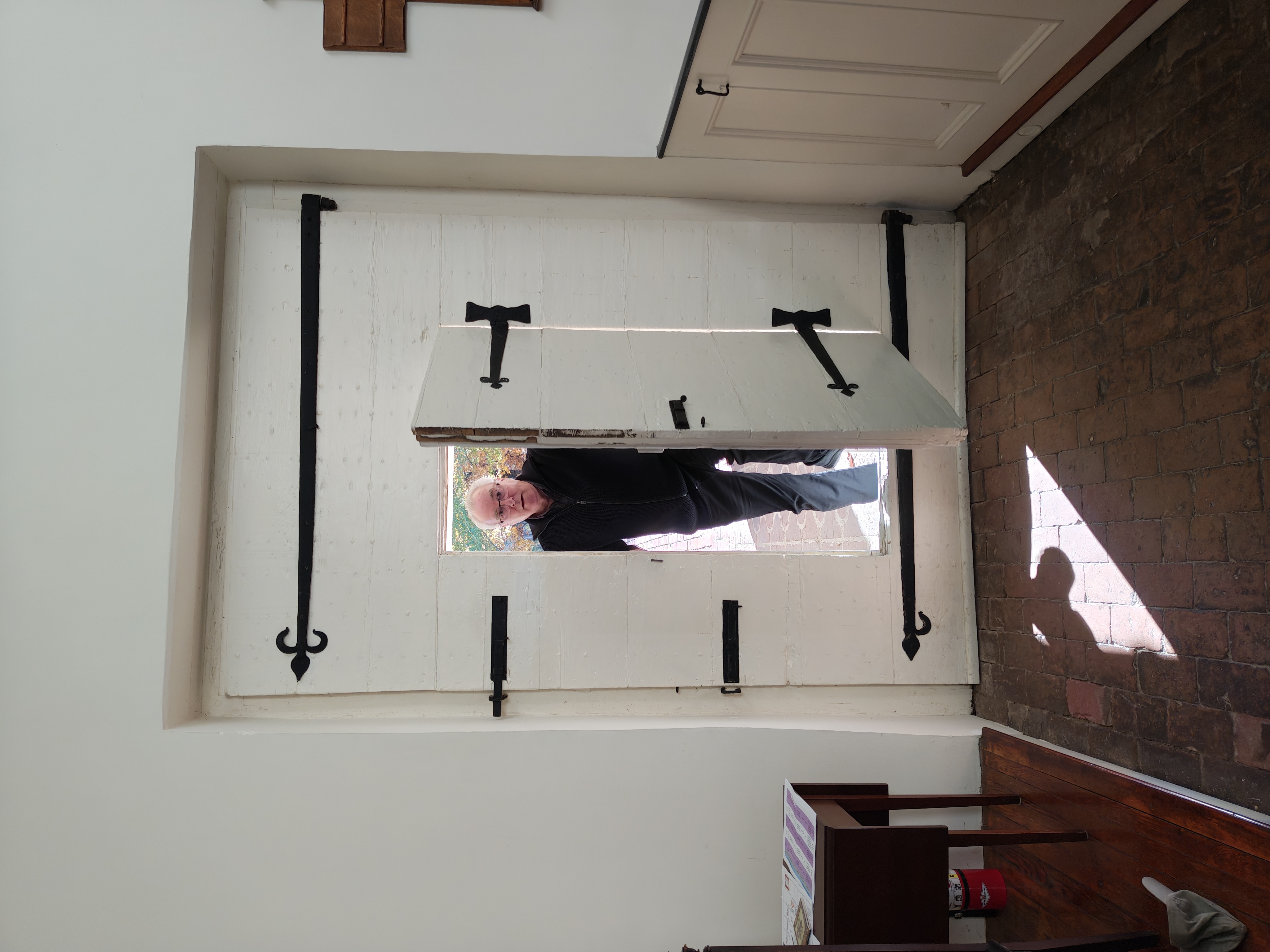
The front door of the Episcopal Church in Yeocomico, Virginia, dates back to 17th century. If you look closely, you can see that it is actually two doors in one; on Sundays, as you enter church, you must step through a door within a door. This unusual feature is a visual reminder to heed the words of Jesus from the gospel of Matthew:
“Enter through the narrow gate; for the gate is wide and the road is easy that leads to destruction, and there are many who take it. For the gate is narrow and the road is hard that leads to life, and there are few who find it.” (Matthew 7:13-14)
At the end of the service, the larger door opens. Our brief experience of “heaven” has prepared us to go out into the world and proclaim the good news. For the early European and African settlers who faced many challenges and hardships in the new country, Matthew’s gospel passage would have had a special resonance.
The symbols of church foster a conscious and subconscious understanding of our faith. Near the front door of Yeocomico church stands the font, made from 17th century Italian marble. Fonts are usually found near the entrance to churches, since the sacrament of baptism is the formal entry to the Christian life.
During the baptism service, the promises made by parents on behalf of their children, or indeed by those who can speak for themselves, are accompanied by an action: in ancient times, you would be plunged beneath the surface of the water to symbolize your death to the old life - a kind of watery burial - and then raised from the water into new life in Christ, a new creation. The water itself symbolizes the washing away of sins. Thus cleansed, you stand in right relationship with God.
Some Churches have holy water resting in a stoop beside the front door. This provides an opportunity for the baptized to remember their own entry into the worldwide family of faith. When you pass through the door, you dip your fingers into the water and then make the sign of the cross. When you draw the cross over your body, you are drawing the sign of Jesus’ crucifixion, by which the debt of our sin was redeemed. Jesus chose “the road that is hard,” and we should be prepared to do the same.
The interior of churches can reflect doctrinal as well as religious stances. A church with a large pulpit, for example, reflects the influence of the Reformation, that religious and historical movement that swept away much Catholic doctrine and practice. As the word took precedence over sacrament, 18th and 19th century churchgoers could expect to hear sermons lasting two hours or more. The Eucharist became the poor cousin to preaching, with only a small altar or table at the back of church to mark its presence. In some churches, you would be lucky to receive communion more than twice a year.
However, a church that distrusts its symbols also distrusts its members. The fashion for bare churches without candles and with few communion services led to a decline in attendance. It so happens that there is a human need for the visible symbols of faith. Hence the revival of ritual in the 19th century, when previously abandoned practices and traditions were recovered.
One of these was the use of incense. In the book of Revelation there is a vision of heavenly worship. Around the throne of God, twenty-four elders “fell before the Lamb, each holding a harp and golden bowls full of incense, which are the prayers of the saints.” (Revelation 5:8) Years ago when I served as an acolyte, I was told that our prayers rose upward like incense, its sweet smell a foretaste of heaven.
There were no clouds of incense wafting heavenward when I visited Yeocomico church. It remains firmly rooted in the Reformation tradition. However, the Eucharist was celebrated, as it is on every Sunday, and the sermon was no longer than fifteen minutes. Some things change, while others stay the same. I remember an enigmatic quote from long ago: Tradition is not wearing your father’s hat, but having a baby.
The experience of stepping through the door reminded me not to take God’s grace for granted. Salvation that was won so dearly is not to be received lightly or frivolously. Going to church in the 17th and 18th centuries may have been a social obligation, but underlying the custom was a more serious matter: the need for salvation, and our dependance on God for our passage through. Narrow is the gate that leads to life.
Father David
0 Comments
There are no comments.
Stay Tuned
Sign-up for David's newsletter