

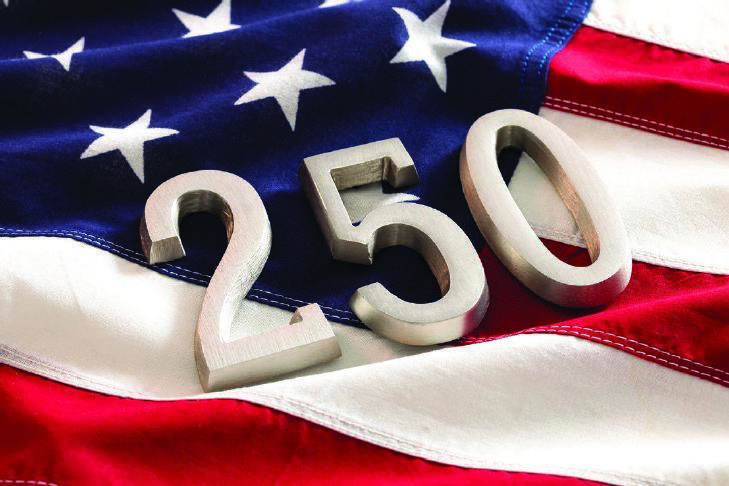
Happy 250th Anniversary!
In November 1776, four months after the ratification of the Declaration of Independence, the army of the British General William Howe attacked Fort Washington. It turned out to be a disaster for the loyalist side, as the redcoats captured the last American stronghold in Manhattan. George Washington, stuck on the other side of the Hudson, was unable to do anything to prevent defeat.
This military setback proved to be temporary, however. In war it is always the last battle that counts. The Continental Army continued to fight on until the King’s army was eventually defeated. The Declaration of Independence, which could have ended up as a footnote in history, became a foundational document in the American revolution.
As the war was being fought on the battlefields, another war was being waged for the hearts and minds of the people. In November 1776, when the British captured Fort Washington, they discovered among the abandoned cannons some pamphlets entitled Common Sense, written by Thomas Paine. This 47 page document persuasively argued for independence from the British Crown. A British officer who read the pamphlet described Paine as a “scoundrel.” Yet Paine’s writings addressed the grievances of the loyalists and convinced them of the rightness of their cause.
This is what animates the cause of freedom: an underlying philosophy or idea. You won’t fight long for freedom unless you know what freedom means and what difference it will make to your life. The educated founders of our great nation argued in favor of separation from the Crown, drawing upon their knowledge and experience of human affairs. In their view, freedom permitted the greatest flourishing of the human soul, whether in commerce, art or in any other kind of human endeavor. This included the freedom to speak without fear of arrest, to write without fear of censorship, to live peacefully alongside your neighbor, respecting one another differences and property. Let’s not forget the freedom to practice one’s religion.
There are parallels between the rise of Christianity and the story of American Independence. After the signing of the Declaration of Independence, America did not suddenly become free. In the same way, after the resurrection of Jesus, the world did not become Christian overnight. For the Church to grow, the Christian faith had to be lived, taught and shared. And it had to be fought for.
What was different about the Christian revolution is that its weapons were not guns, but prayers and words. It grew not by force, but through loving deeds. Its animating philosophy, if you like, was the one given it by its founder Jesus Christ. This included service, self sacrifice and a willingness to speak the truth. Jesus gave us more than a set of principles upon which to live, however - he gave us himself. When we speak of ourselves as Christian, we identify not with a cause or an ideology but with a person.
This is a particular kind of freedom - not being free to do just what I want - but the freedom to become a citizen in a place Jesus called “the kingdom of heaven.” Jesus exhorts us to “be perfect, therefore, as your heavenly Father is perfect.” (Matthew 5:48) Deep in our hearts we doubt if we will ever be perfect and yet, if God has confidence in us, then we should learn to have confidence in ourselves. Our work begins in regular worship and prayer, repentance and accepting God’s forgiveness and help in all that we undertake.
I’m sure that God was looking over the shoulders of those who were drafting the Declaration of Independence and later the Constitution. In their own way, these learned men were seeking a kind of perfection in the governance of human affairs. You can argue that they fell short of their aim but, in the history of the world, human beings have never experienced such freedom and human flourishing as we do in the United States today.
On the 250th anniversary of the United States Declaration of Independence, let us give thanks for our country and for its animating values and principles. Above all, let us be grateful for its most precious gift, the gift of freedom, the hope and dream of all people.
Father David
0 Comments
There are no comments.
Stay Tuned
Sign-up for David's newsletter